Dafna trains child and family therapists and professionals, and provides therapy and training for families in person or online. Start with whichever one describes you.
A hands-on, attachment-based model for professionals who want practical, relational tools for working with children and families.
For the parent who loves their child deeply, but is tired of feeling reactive, stuck, or defeated. For the parent who has tried strategies, consequences, and "doing better," yet still ends up in the same cycle: escalation, shutdown, guilt, and distance.

How fear and shame make it harder to tell the truth
Few things unsettle a parent quite like catching their child in a lie. Join Dafna live to look at what's really going on underneath, and how to respond so telling the truth feels safer for your child.
November 12, 2026
12:00 to 1:00 pm ET · 9:00 to 10:00 am PT ·
Live on Zoom
Free to attend. Can't make it live? Register anyway and the replay will be sent to you.
This training program offers a trauma-informed, attachment-based lens for working with parents and children together. Learn physiologic, nonverbal strategies that build safety, connection, and lasting repair.
No prior attachment training required. Recordings available if you miss a session.

Integrative Attachment Family Therapy (IAFT) is a comprehensive, attachment-based model developed by family therapy expert and attachment specialist Dafna Lender, for professionals who want practical, relational tools for working with children and families. It is an integrative, multidimensional framework grounded in attachment science, interpersonal neurobiology, somatic practice and experiential family therapy.
IAFT helps professionals recognize the patterns unfolding in the relationship, understand what is driving them, and intervene in ways that support safety, co-regulation and connection.
Work directly with both child and caregiver, rather than focusing on one without the other, and notice and respond to the caregiver's nervous system in real time.
IAFT is not only about understanding attachment, it is about knowing how to work with it in practice, using nonverbal communication, therapeutic play and constructive conversations.
IAFT Level 1 introduces the core framework and foundational tools of the model. From there, participants are encouraged to join the Monthly Skills Group and then continue into IAFT Level 2.
IAFT Level 1 offers both conceptual clarity and practical tools that professionals can immediately integrate into their work. It is designed to help participants understand the IAFT framework, strengthen their alliance with parents, and learn activities and tools to conduct a parent-child session.
A rare space to go deeper and learn alongside fellow IAFT therapists. In a small group for two hours each month, participants may share clinical video, attune to the subtle, often nonverbal dynamics between parent and child, find new ways forward in difficult cases, and experience the grounding support of being in this work together.
An advanced, small-group training for professionals who have completed Level 1. Through live teaching, case-based learning, and a more interactive training environment, Level 2 helps participants deepen their confidence, refine their clinical decision-making, and apply IAFT with greater nuance and skill.
Dafna is extremely knowledgeable and passionate, which I think made the training easier to absorb. Dafna seems to embody the PACE model and her kindness and curiosity means that you are pushed outside of your comfort zone at times in a really helpful way.
IAFT training participant
Seeing you model PACE in practice really helped consolidate it for me. Seeing you model the importance of voice prosody and vitality affect was transformational. I have been using this every day with my kids since I saw you using it and I cannot express in words what a difference it has already made in our relationships.
IAFT training participant
This book should be required reading for anyone who works with children. Dafna Lender's integrative attachment family therapy comes darn close to comprehensive. I can't recommend this illuminating book highly enough.
Karen Doyle Buckwalter, LCSW, RPT-S
Author & podcaster
Learn how to stay connected to your child, even when things get messy.
You'll learn practical, attachment-informed tools that help you understand what's happening underneath behavior, so you can respond with more steadiness, create more connection and feel better with your child. This isn't about becoming a perfect parent. It's about becoming a more grounded one, so your child can feel you as a reliable and warm presence even when things are hard.
What you'll move through (6 modules):
You don't have to be perfect to be the parent your child needs.

Unlike other parenting trainings I've done, I don't leave the class with a huge sense of guilt for what I'm not doing right.
Course participant
I really appreciate Dafna's direct, no-nonsense approach to putting children's needs first while also being empathetic to parents. It's a tricky line to balance and she does it skillfully.
Course participant
I have often been discouraged by parenting courses before, because it feels like it all falls to the parent to fix it. Dafna recognized you can only change yourself, and it didn't feel discouraging at all.
Course participant
The key to meaningful change is connection.
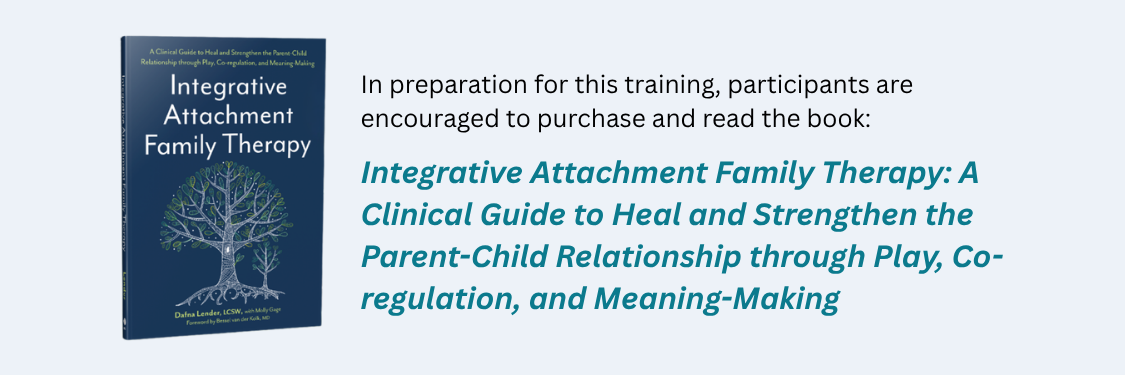
In this treatment guide, Dafna walks readers through the IAFT framework, providing therapeutic insight and concrete strategies to help families achieve meaningful and lasting change.
Order the book →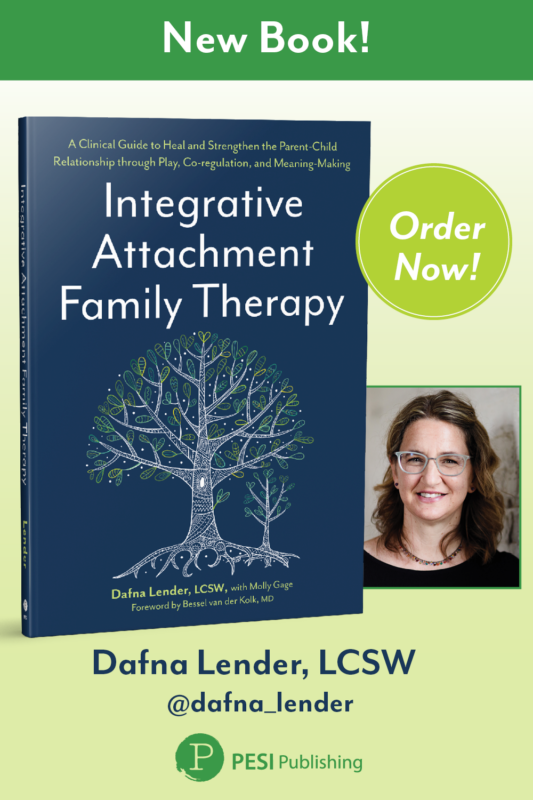
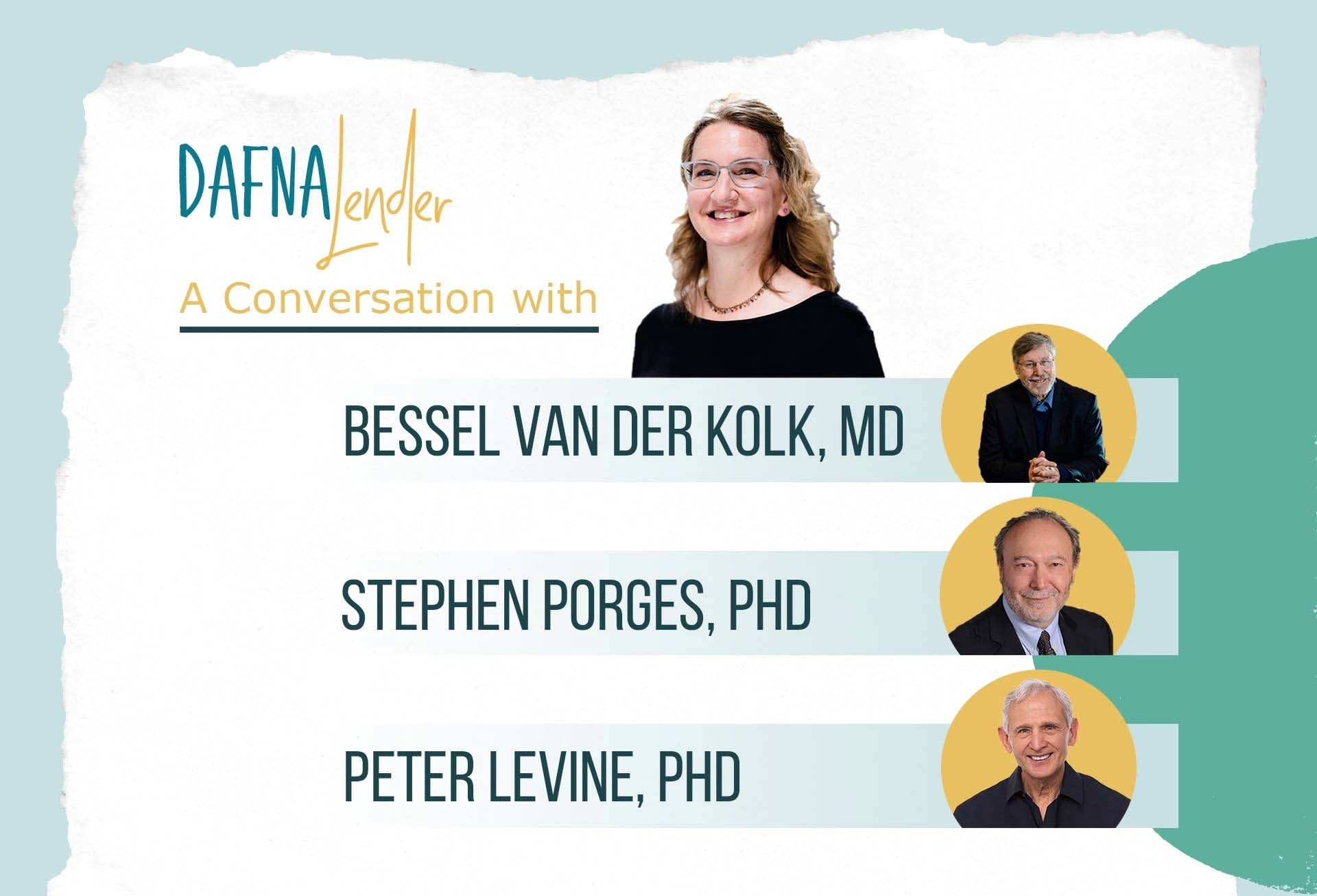
Dafna Lender's framework uses the power of neuroplasticity to provide parents and children with new experiences of safety and connection that shift trauma-informed relationships.
Bessel van der Kolk, MD
Author of The Body Keeps the Score
A transformative therapeutic strategy that leverages the importance of both child and parent feeling safe enough to trust each other.
Stephen Porges, PhD
Author of The Polyvagal Theory
A comprehensive book that will benefit all mental health care professionals who strive to alleviate children's pain and reconstruct family functioning.
Peter A. Levine, PhD
Author of Waking the Tiger
Dafna is a family therapy expert and attachment specialist. Dafna is an international trainer and supervisor for practitioners who work with children and families. She is a certified trainer and supervisor/consultant in both Theraplay and Dyadic Developmental Psychotherapy (DDP), as well as an EMDR therapist.
Dafna's expertise is drawn from 29 years of practicing family therapy around diverse problems: extreme acting out and withdrawn children, depression, ADHD, school issues, adoption identity and developmental trauma, as well as parent-child relational conflict, dysregulation and mood instability in parents as well as co-parent conflict. Dafna's style, whether as a therapist or teacher, is combining the light-hearted with the profound by bringing a playful, intense and passionate presence to every encounter.
Dafna is author of Integrative Attachment Family Therapy (2023) and the co-author of Theraplay: The Practitioner's Guide (2020). She teaches and supervises clinicians in 15 countries in 4 languages: English, Hebrew, French and Spanish.
Read Dafna's story → Therapy with Dafna →
Sign up with your email to receive news and updates.